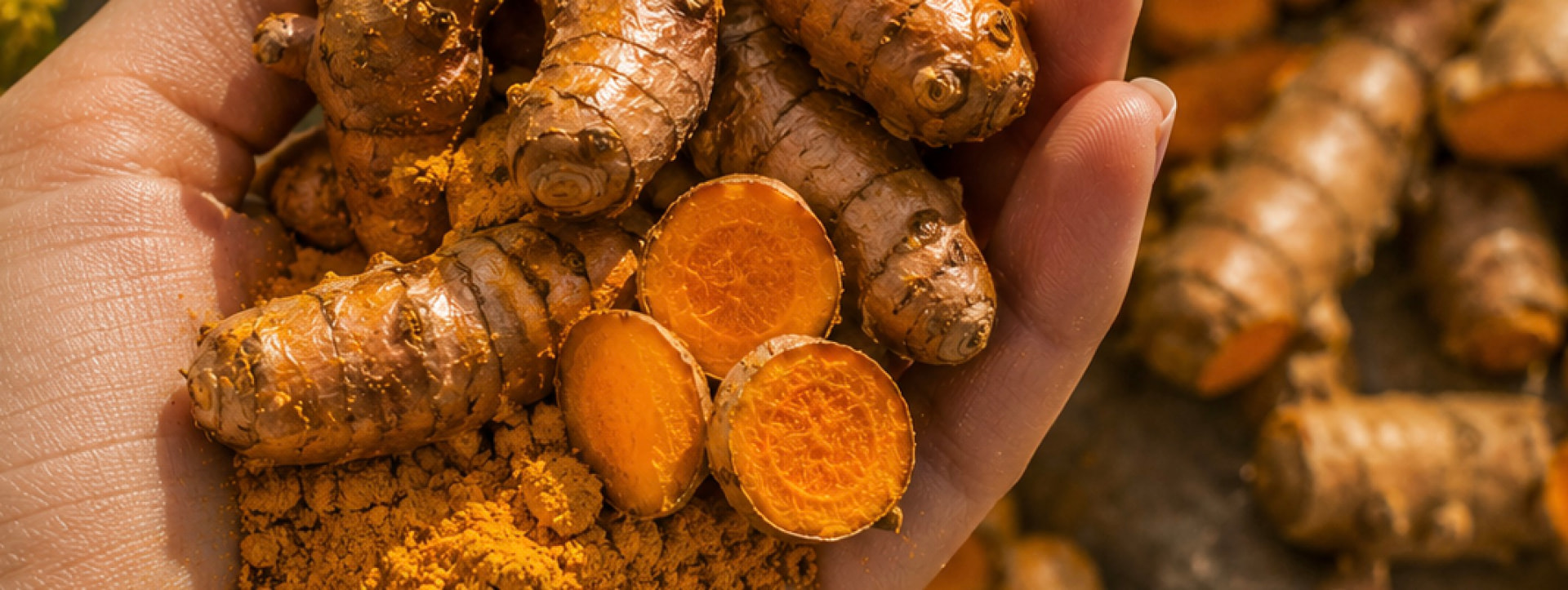
Turmeric does stain your skin, but only temporarily and only on the surface. Curcumin, the compound that makes turmeric yellow, is a fat-soluble pigment that clings to the outermost layer of skin instead of rinsing away in water. The tint usually fades within a few hours to a couple of days, and an oil-based cleanser lifts most of it immediately.
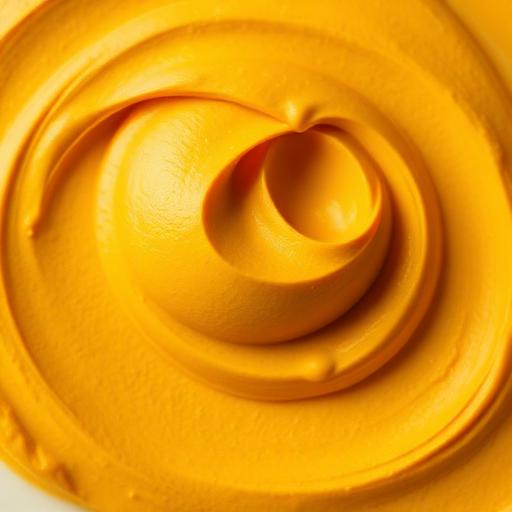
Kaolin clay with turmeric and saffron. Once or twice a week, not daily.
View productKey takeaways
- Turmeric's yellow comes from curcuminoids, the same compounds used to color cheese and butter.
- Curcumin is not water soluble, which is why rinsing alone often leaves a tint behind.
- Dry, porous or freshly exfoliated skin holds the color longer than well-hydrated skin.
- Oil dissolves the pigment. A cleansing oil or plain jojoba oil lifts most of a stain in one pass.
- A formulated mask stains less than raw turmeric paste, because the pigment is suspended in a base rather than sitting directly on skin.
Quick facts
| Question | Short answer |
|---|---|
| What causes the stain | Curcuminoids, the fat-soluble yellow pigments in turmeric |
| Who sees it most | Dry, porous or recently exfoliated skin; very fair skin shows it more visibly |
| How long it lasts | Usually a few hours; up to two days on dry skin |
| How to remove it | An oil-based cleanser, then a normal wash |
| How to prevent it | Shorter contact time, moisturized skin, and rinsing with a cleanser rather than water alone |
| Does it stain fabric | Yes, and more stubbornly than skin. Use a dark towel |
Why does turmeric stain skin in the first place?
Turmeric stains because of its pigments. The compounds responsible are called curcuminoids, and they are what give the root its color. Prasad and Aggarwal, in Herbal Medicine: Biomolecular and Clinical Aspects, describe curcuminoids as turmeric's main coloring agents and note the plant's color is vivid enough that turmeric has long been known as Indian saffron, and is used commercially as a coloring agent in cheese, butter and other foods.
The property that matters for your face is a chemical one. The same chapter states plainly that curcumin is not water soluble. A pigment that will not dissolve in water does not rinse away in water either. It sits on the outermost layer of the skin, binds loosely to the proteins and oils there, and stays until something it does dissolve in comes along.
That single fact explains almost everything else on this page: why rinsing feels like it should work and doesn't, why oil works immediately, and why dry skin holds the color longer than skin with an intact moisture barrier.
Who is most likely to see a yellow tint?
Three groups notice it more than everyone else. People with dry or dehydrated skin, because a rougher, more porous surface gives the pigment more to hold onto. People who have just exfoliated, for the same reason. And people with very fair skin, where a faint warm tint is simply more visible against the base tone.
If your skin is well moisturized and you are using a formulated product rather than a homemade paste, there is a reasonable chance you will not see anything at all.
How long does turmeric staining last?
For most people it fades within a few hours as the outermost skin cells shed and normal washing carries the pigment away. On dry skin it can persist into a second day. It is superficial, it is temporary, and it does not require anything dramatic to remove.
How do you get turmeric off your face?
Use oil, not more water. Because curcumin dissolves in fats and not in water, an oil-based cleanser, micellar water, or even plain jojoba or sweet almond oil on a cotton pad will lift most of the tint in a single pass. Massage it in for thirty seconds, then follow with your usual cleanser.
What not to do: scrub harder, use a stronger exfoliant, or reach for a spot-removal product. You will irritate your skin faster than you will remove the pigment, and the tint was going to fade on its own regardless.
How do you prevent it before it happens?
Four things help, in rough order of usefulness. Moisturize the night before, so the surface is smoother and less porous. Keep contact time to what the product actually calls for rather than leaving it on longer for good measure. Remove it with a cleanser rather than water alone. And do not apply a turmeric product immediately after exfoliating.
Does a turmeric mask stain the same way raw turmeric does?
Generally less. Raw turmeric powder mixed at home puts undiluted pigment straight onto skin at an unknown concentration. In a formulated product the curcuminoids are dispersed through a base of water, clay, oils and emulsifiers, which limits how much pigment contacts skin directly and how much of it is left behind when you rinse.
That is a difference of degree, not of kind. A formulated mask can still leave a faint warm tint, particularly on dry skin. Anyone claiming a turmeric product cannot possibly tint skin is describing a formula with very little turmeric in it.
For what it is worth, ours will tint. The Mask is gold because there is turmeric and saffron in it, not because anything was added to make it look that way, and a pigment that colors the product will sometimes color you. We would rather say that here than have you find out on a Tuesday.
Is the color a sign the product is working?
No, and this is worth being direct about. A yellow tint tells you turmeric was present and that some pigment stayed on the surface. It tells you nothing about whether anything beneficial happened underneath. Color is evidence of pigment, not evidence of effect.
If you want the wider picture, our guide to the four-step routine covers where a mask sits in an order of use, and the turmeric ingredient page covers what the extract is and where it comes from. For the other pigment question people ask us, see bamboo charcoal.
It is also worth knowing how thin the underlying research is. Di Lorenzo and colleagues, reviewing clinical studies on topical curcumin in Skin Pharmacology and Physiology in 2023, note that most clinical work on curcumin studies it taken by mouth, and only a few studies describe topical application at all. An earlier systematic review by Vaughn, Branum and Sivamani found 18 clinical studies that met their inclusion criteria across all uses, oral and topical combined, and concluded that the published evidence was limited and that further study would be essential.
Turmeric is a well established cosmetic ingredient with centuries of traditional topical use behind it. That is a different thing from a settled body of clinical evidence, and it is more honest to say so.
Worked example: what a turmeric tint actually looks like
Say you use a clay-based turmeric mask on a Tuesday evening. Skin is normal to slightly dry, you leave it on for the ten minutes the label asks for, and you rinse with warm water and your hands.
You will likely see a faint warm cast across the cheeks and forehead immediately after rinsing, strongest where skin is driest, and most visible in bathroom lighting. Massage a cleansing oil over dry skin for thirty seconds and rinse, and most of it goes. Whatever remains is usually gone by the time you wake up.
The version that goes wrong looks like this: you exfoliated that morning, you left the mask on for twenty-five minutes because ten felt conservative, and you rinsed with water only. Now the tint is deeper, it is sitting in the drier patches unevenly, and it takes until Thursday to clear. Nothing harmful happened. It was three avoidable decisions stacked on top of each other.
Common mistakes
- Rinsing with water and assuming it failed. Water is the one thing the pigment reliably resists.
- Leaving it on longer than directed. Longer contact increases tint without increasing benefit.
- Using a white towel. Turmeric stains fabric more stubbornly than skin, and often permanently.
- Applying it straight after an acid or a scrub. Freshly exfoliated skin holds pigment far longer.
- Treating the tint as a problem. It is temporary, superficial and expected.
Frequently asked questions
Will turmeric stain my skin permanently?
No. The pigment sits on the outermost layer of skin, which sheds continuously. Any tint is temporary and typically resolves within a day or two without intervention.
Does turmeric stain darker skin tones?
The pigment deposits the same way on all skin tones. It is simply more visible on fair skin, where a warm yellow tint contrasts more with the base tone.
Can I use a turmeric mask before an event?
Leave a buffer. If you have not used the product before, try it two or three days ahead rather than the night before, so you know how your skin responds.
Does turmeric stain clothes and towels?
Yes, and more persistently than skin. Curcumin is used as a textile dye. Use a dark towel and keep it away from light fabrics.
Will washing with soap remove a turmeric stain?
Partially. Soap and surfactants help more than water alone, but an oil-based cleanser works considerably faster because the pigment dissolves in fats.
Why is my turmeric mask orange rather than yellow?
Color varies with the source material, the extract used, and what else is in the formula. Clay, oils and other botanicals shift the final shade toward orange or gold.
Is turmeric safe to leave on overnight?
Follow the directions on the product you have. Leaving a rinse-off mask on overnight increases tint and the chance of irritation without a corresponding benefit.
Sources
- Prasad S, Aggarwal BB. Turmeric, the Golden Spice: From Traditional Medicine to Modern Medicine. In: Herbal Medicine: Biomolecular and Clinical Aspects, 2nd edition. CRC Press, 2011.
- Di Lorenzo R, Forgione F, Bernardi A, Sacchi A, Laneri S, Greco G. Clinical Studies on Topical Curcumin. Skin Pharmacology and Physiology. 2023;36(5):235-248.
- Vaughn AR, Branum A, Sivamani RK. Effects of Turmeric (Curcuma longa) on Skin Health: A Systematic Review of the Clinical Evidence. Phytotherapy Research. 2016;30(8):1243-1264.
This article is for general information. strangely. products are cosmetics. They are not intended to diagnose, treat, cure or prevent any disease.
Kaolin clay with turmeric and saffron. Once or twice a week, not daily.
View product